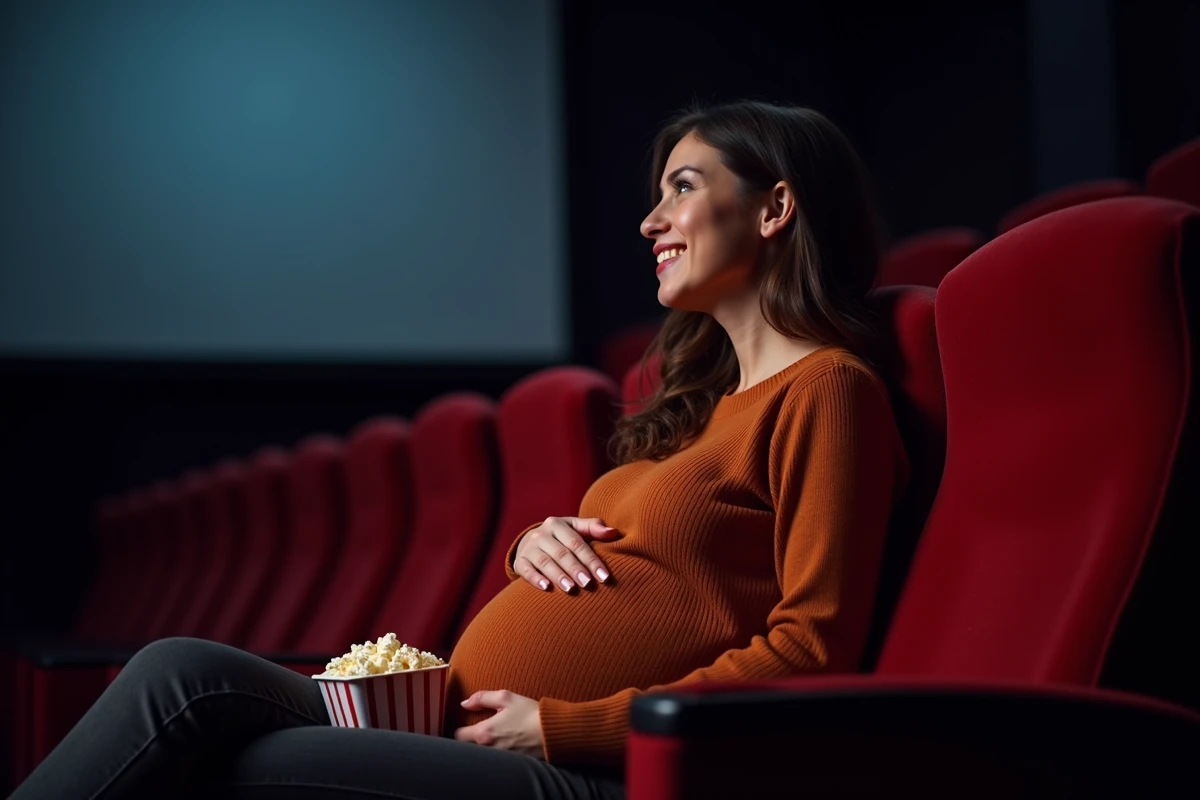
Third trimester, a desire to go out, and a movie that has been tempting for weeks. Yet we hesitate: the volume, the prolonged sitting position, the heat of the theater. Going to the cinema while pregnant poses no medical contraindication, regardless of the stage of pregnancy. The precautions to take are related to comfort and noise management, not a medical prohibition.
Sound volume in cinemas and fetal exposure: what really matters
The main concern is the sound. In a Dolby or IMAX equipped theater, sound peaks during action scenes can rise well above conversation levels. Amniotic fluid partially dampens high frequencies, but low frequencies pass through the belly without difficulty.
According to recommendations summarized by the INRS, prolonged exposure to more than 85 dB during a workday should be avoided for pregnant women, due to an increased risk of hearing disorders in the child and prematurity. A cinema session lasts on average less than two hours, which is still very far from continuous professional exposure.
The campaigns for the National Hearing Day (2023-2024) specify that the combination of intensity, duration, and repetition determines the real risk. A brief sound peak during an explosion scene is considered less problematic than repeated exposure to moderate but continuous sound. Here we discuss an article published on the topic of cinema and pregnancy on Doctinews that details these nuances related to the sound environment of theaters.
In practice, an isolated session per week poses no problem for the fetus. Watching multiple films on the same day or frequenting theaters repeatedly over a short period deserves more caution.
Baby-friendly sessions: a concrete option for pregnant women
Since the end of the 2010s, several networks of French theaters have offered so-called “baby-friendly” or “parent-baby sessions.” The sound volume is lowered, the lighting is partially maintained, and freedom of movement in the theater is tolerated.
These sessions are not only aimed at parents with an infant. Some operators indicate in their communication that these conditions are also suitable for pregnant women in late pregnancy, particularly for muscular comfort and blood circulation. This is a path to explore as the due date approaches and sitting for long periods becomes uncomfortable.
Not all theaters offer this format. Feedback on this point varies according to brands and cities. Before booking, a quick look at the theater’s program or a quick call can verify if this type of session exists near you.
Physical comfort in the theater: sitting position and blood circulation during pregnancy
Noise is not the only parameter. Sitting in a cinema seat for two hours can cause lower back pain, heavy legs, or even contractions in some women during the third trimester. The pelvis is compressed, and venous return is slowed.
A few simple adjustments can radically change the experience:
- Choose a seat at the end of the row to be able to get up, walk a few steps, or go to the restroom without disturbing the entire row
- Bring a lumbar cushion or a small rolled blanket to support the lower back against the seat back
- Plan to bring a bottle of water and a light snack to avoid drops in blood sugar, which are common in the third trimester
- Avoid late sessions if fatigue sets in quickly at the end of the day
The choice of seat is as important as the choice of film. Reclining seats, available in some premium theaters, provide better back support and allow for slightly elevating the legs.
What type of film to choose when pregnant
This is not about censoring your tastes. The subject is sensory intensity. A horror film or an action blockbuster in IMAX combines high volume, jumps, and adrenaline spikes. Nothing dangerous in itself, but prolonged maternal stress can influence the fetal heart rate.
Comedies, dramas, animated films, or documentaries offer a gentler experience in terms of sound and emotion. This is not a rule, it’s a personal choice. Some women handle a thriller very well in the eighth month, while others prefer to avoid any tension buildup.
A more objective criterion: duration. Films longer than 2 hours and 30 minutes require a long sitting position without breaks. Prioritizing sessions of less than two hours reduces physical discomfort, especially in the last trimester.
Perinatal mental health: cinema as a necessary break
Recent reports on perinatal mental health highlight that cultural outings help reduce the isolation of pregnant women. Cinema provides a clear break from the mental load associated with preparing for the baby’s arrival.
Allowing yourself a session, alone or accompanied, helps maintain a connection to your life before, a social rhythm that is not limited to medical appointments. This dimension is often underestimated.
No medical reason justifies depriving oneself of cinema during pregnancy. The only limits are those of personal comfort and common sense regarding sound volume. Choosing your seat, checking the type of theater, and keeping a bottle of water within reach are enough to transform the session into a true moment of relaxation.