
The female geek culture is not limited to collecting figurines or watching science fiction series. It encompasses concrete practices related to the web, digital creation, video games, and increasingly, the use of artificial intelligence tools. These enthusiasts build projects, animate communities, and develop technical skills that far exceed the realm of leisure.
Generative AI and the web for women: a lever against the glass ceiling
Have you ever tried to generate a website mockup, a logo, or a script in just a few minutes with an AI tool? This is exactly what many female geeks do to accelerate their personal and professional projects.
Specifically, women passionate about the web use language models to write code, automate repetitive tasks, or prototype interfaces. Instead of waiting for a job offer, they create their own online showcase, launch a technical blog, or develop a SaaS tool from their living room.
Generative AI helps compensate for a lack of professional network by reducing the time needed to produce a quality deliverable. A developer who masters prompts to generate CSS or JavaScript saves several hours a week. This freed-up time is reinvested in research, training, or building a stronger portfolio.
This phenomenon is not trivial. Law No. 2025-456 of July 12, 2025, now imposes a goal of 30% women in RNCP titles related to computer science in work-study programs. This regulatory obligation pushes training organizations to rethink their reception systems, but AI tools offer a shortcut that the institutional framework takes time to build.
To explore this universe of female geek culture applied to digital, you can visit Geekette et Greluche online and discover resources designed by and for enthusiasts.
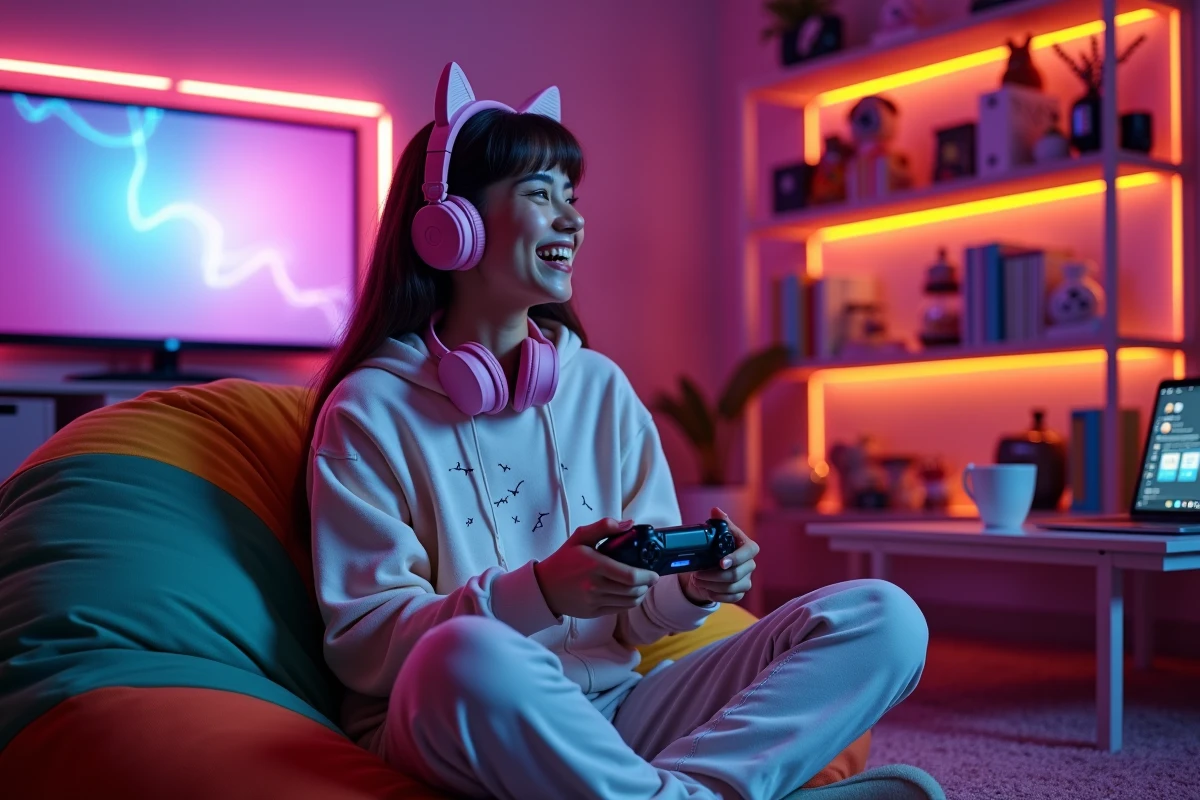
Female geek communities: where digital enthusiasts meet
The word “community” may seem vague. In the case of female geeks, it refers to very concrete spaces: thematic Discord servers, local associations, events like GeekFest, or collaborative creation groups on GitHub.
These spaces serve a specific function. They allow for technical questions to be asked without fear of condescending comments. They also provide a framework for sharing ongoing projects, whether it’s a video game mod, a podcast about series, or a personal website.
What distinguishes these spaces from general forums
On a mixed forum, a basic question about HTML can trigger responses like “search on Google.” In a female geek community, the same question receives a detailed explanation, often accompanied by a link to a tutorial tested by a member.
- Dedicated associations organize practical workshops (introduction to coding, website creation, game customization) with support tailored to both beginners and experienced profiles.
- Themed evenings combine leisure and learning: video game tournaments followed by a workshop on online security, for example.
- Events like GeekFest increasingly include conferences on the role of women in digital, with concrete feedback rather than abstract speeches on diversity.
These communities function as skill accelerators, not just as socialization spaces. A regular participant progresses faster than an isolated self-taught individual because she benefits from immediate feedback on her projects.
Web creation and video games: the rising geek activities among women
When talking about female geek culture, two areas concentrate particular energy: web content creation and video games.
On the web side, the profiles are varied. Some female geeks develop complete websites, while others specialize in interface design or technical writing. Female digital creation is no longer limited to lifestyle blogs. There are data visualization projects, technical newsletters, and video channels for computer science popularization.
Video games: beyond mere entertainment
Female gamers represent a significant part of the gaming community, but their presence remains underestimated. The issue is not the number: it’s visibility. Female characters in games have long been relegated to secondary or stereotypical roles. This representation is evolving, partly driven by creators developing their own independent games.
A developer creating a video game with an engine like Unity or Godot mobilizes skills in programming, storytelling, sound design, and project management. An independent game published constitutes a more telling technical portfolio than a traditional CV.

Quotas in digital training: what the 2025 law changes
Law No. 2025-456 published in the Official Journal on July 13, 2025, sets a goal of 30% women in computer training registered with the RNCP and offered in work-study programs. This threshold concerns training organizations, not companies directly.
In practice, this means that digital schools must adapt their recruitment processes, communication materials, and sometimes their teaching formats. A quota without appropriate pedagogical support risks remaining just a number in a report.
The female geeks who are already following self-taught paths through online resources, communities, or AI tools find themselves in an interesting position. They enter training with practical experience that traditional curricula do not always provide. Their mastery of web creation tools, their habit of solving technical problems independently, and their familiarity with online collaborative environments give them a head start.
Electronic sports follow a similar trajectory. Female leagues are being structured, and associations are organizing mixed competitions with explicit inclusion rules. The world of e-sport is joining that of the web in this dynamic: technical skill ultimately prevails over gender biases.
The female geek universe does not ask for permission or external validation to exist. It is built every day, project by project, line of code by line of code. The tools are accessible, the communities are active, and the regulatory framework is beginning to catch up with what enthusiasts have initiated on their own.