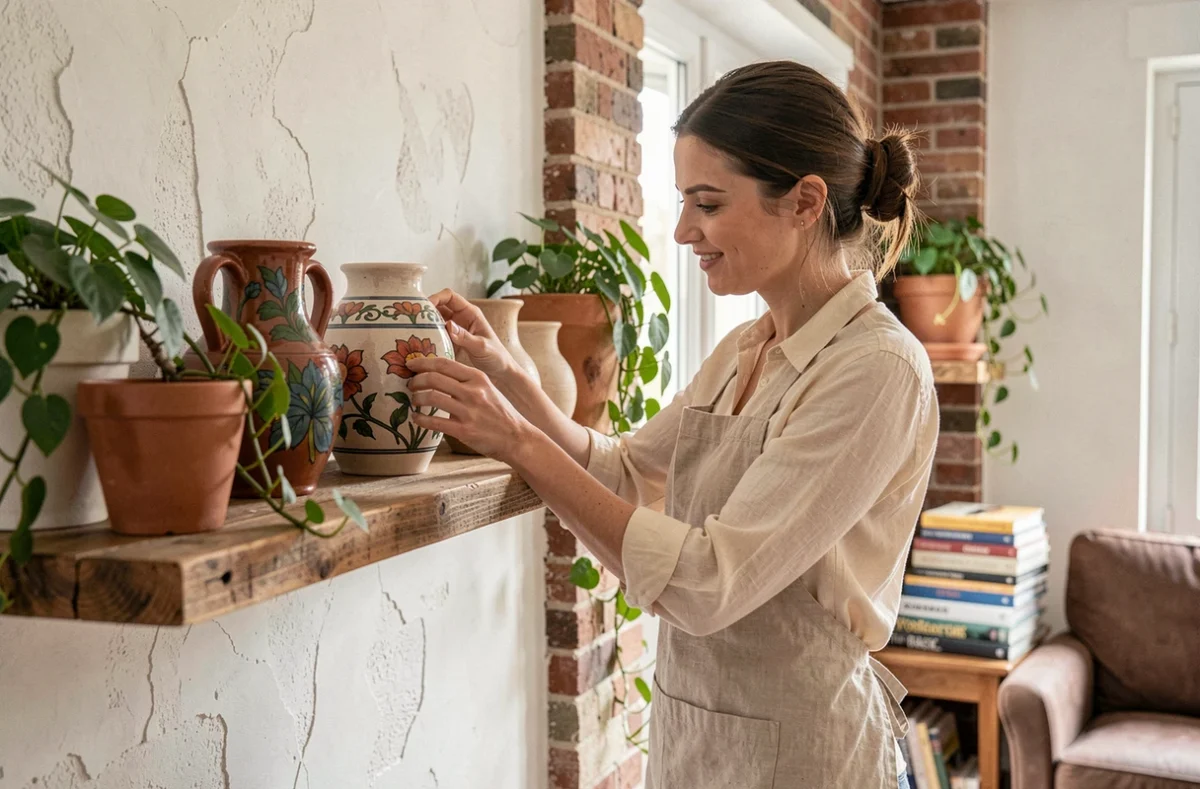
A hand-sewn cushion, a repainted shelf with leftover paint, a vase shaped from a terracotta pot: handmade decor transforms an interior without a huge budget. What truly changes the atmosphere of a room is not the price of the objects, but the coherence between materials, colors, and the function of each element. Enhancing your interior with creative tips mainly requires understanding a few concrete principles before diving in.
Handmade textiles: what the regulations on PFAS change for your projects
Have you noticed that some upholstery fabrics have a waxy, almost plastic feel? This treatment often comes from per- and polyfluoroalkyl substances (PFAS), used to make textiles waterproof or stain-resistant.
The French law n° 2025-188 of February 27, 2025, states that starting January 1, 2030, PFAS will be banned in upholstery textiles: curtains, cushions, sofa fabrics, coverings. For a handmade decor project, this already influences the choice of materials.
Specifically, prioritize linen, dense cotton, or untreated wool for sewing cushion covers, making curtains, or covering a seat. These natural fibers age better, wash easily, and do not emit problematic volatile compounds. A piece of raw linen fabric, for example, becomes more supple with each wash without losing its shape.
By exploring Déco Maison’s decor tips, you will find ideas for integrating these natural materials into timeless handmade creations.
Modular furniture and upcycling: transforming an evolving base rather than a finished object
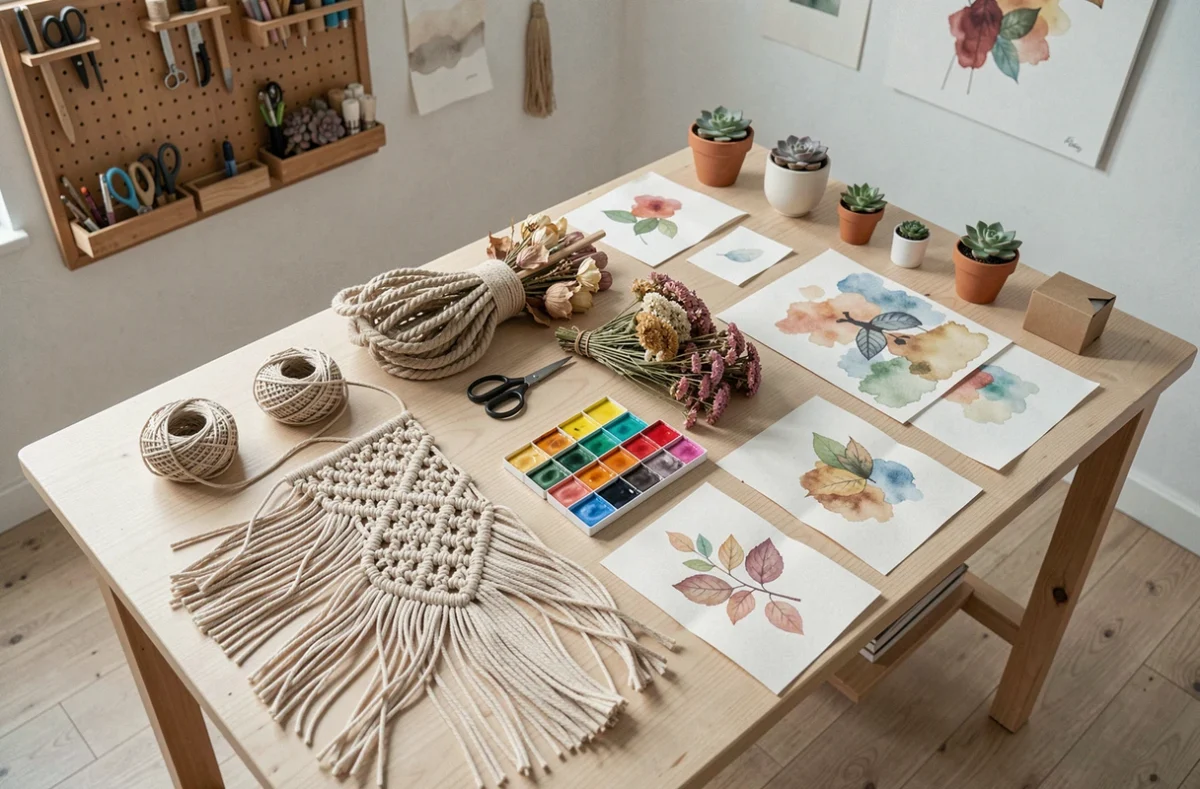
Most furniture makeover tutorials suggest sanding, repainting, or varnishing. The result is often successful but static. Another approach is gaining traction: choosing a piece of furniture as an evolving base to be transformed gradually.
The RSE 2025-2030 framework from Ameublement français encourages the design of modular furniture, assembled with screws, featuring standardized and replaceable components. This principle also applies to handmade items.
Take a modular shelf made of raw wood. You can:
- Replace a shelf with a reclaimed, sanded, and oiled oak board to create a contrast of shades without having to buy the entire piece of furniture.
- Add metal legs painted in an accent color that changes with the season or your current mood.
- Attach brass side hooks to hang plants, wicker baskets, or a round mirror.
The idea is not to redo everything at once. Changing just one element at a time is enough to refresh the ambiance of a room. A black-stained top on a light structure, for example, draws the eye and visually restructures the space without touching the walls.
Indoor air quality and choice of creative products
This topic is rarely addressed in decor guides, yet it directly affects daily comfort. In France, construction and decoration products must display a label indicating their level of volatile organic compound (VOC) emissions, rated from A+ (very low emissions) to C (high emissions).
Any paint, varnish, or glue used indoors must carry this label. For a handmade project, always check this rating before purchasing. A paint labeled A+ emits less formaldehyde and solvents than a paint rated B, which makes a measurable difference in a poorly ventilated bedroom or living room.
Water-based paints, vegetable oils for wood (linen, hemp), and natural waxes are concrete alternatives. They may dry more slowly, but their smell dissipates in a few hours compared to several days for some synthetic products.
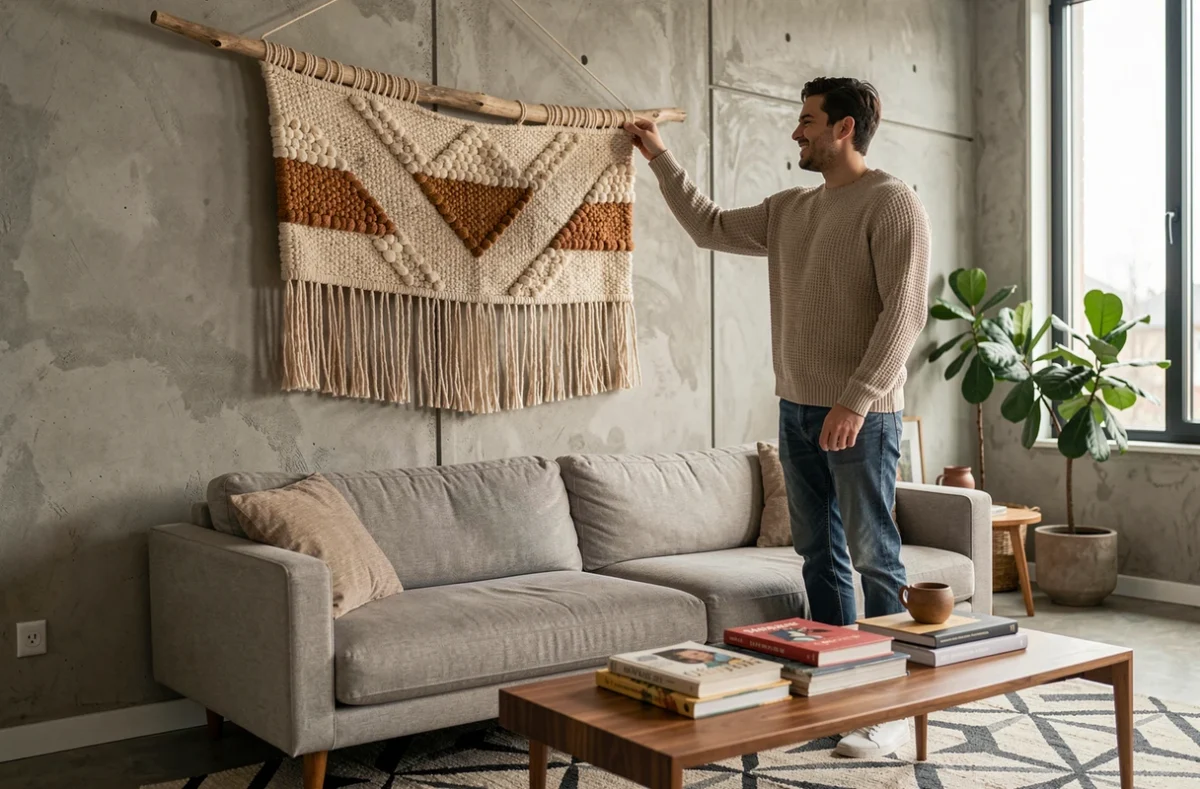
Colors and light: creating a cohesive atmosphere without repainting everything
Repainting an entire wall takes time, materials, and a certain confidence in your color choice. Before getting to that point, a few targeted gestures can produce a comparable effect.
One single object in a bold color can structure an entire room. A terracotta vase placed on a light console, a mustard yellow throw draped over a gray sofa, a hand-painted frame in a deep blue: these color accents serve as focal points for the eye.
Light plays an equally decisive role. A single ceiling light flattens the volumes. By adding a table lamp on a low piece of furniture and a string of lights along a shelf, you create layers of light that add depth to the space.
To make a handmade lampshade, a metal circle and a piece of linen fabric are sufficient. The light filtered through a natural textile creates a soft and warm ambiance, very different from a bare ceiling light.
Reuse in decor: between creative potential and the reality of supply chains
Upcycling is omnipresent on social media. The spectacular transformations of reclaimed furniture give the impression that reuse has become the norm. The reality is more nuanced: only 5% of the objects and materials processed by Ecomaison are directed towards reuse.
This does not mean that your recovery projects are futile. It means being realistic about the condition of reclaimed objects. A solid wood drawer from a dresser can become a sturdy wall planter. An old door can be transformed into a tabletop with trestles. However, a particle board piece swollen with moisture generally isn’t worth the effort of restoration.
Before diving in, check the structural integrity of the object. Solid wood, metal, and ceramics lend themselves well to creative reuse. Particle boards and thin plastics, much less so.
Enhancing your interior with handmade decor relies on healthy material choices, gradual modifications rather than radical transformations, and attention to what we breathe as much as to what we see. The best creative ideas often start from a single well-chosen object, not a complete renovation.