
Statistically, a poorly protected outdoor electrical connection is likely to end up submerged, corroded, or simply out of service before it even celebrates its first anniversary. Humidity, UV radiation, and temperature fluctuations accelerate the degradation of outdoor electrical installations, multiplying the risks of short circuits. IP44 or higher rated junction boxes are mandatory for any connection outside walls, but their installation often bypasses best practices due to a lack of precise information.
A haphazard installation opens the door to insulation defects, corrosion of terminals, and sneaky failures that can sometimes be impossible to locate without disassembly. Too often, fundamental points are overlooked: respecting minimum distances, selecting the right materials, ensuring perfect sealing. These requirements are not trivial; they determine the reliability of the installation.
Understanding the role of an outdoor junction box and its stakes for safety
In the realm of outdoor electricity, the junction box stands as the discreet barrier upon which the safety of the entire system relies. Its purpose? To protect electrical connections from infiltrations, dust, and unwanted intruders that find their way into every nook and cranny. Whether on a facade, in a garden, or under a shelter, it consolidates the electrical cables, distributes circuits, and ensures the connection between the main power supply and each outlet, light fixture, or motorized equipment. Rigor is essential, as the integrity of these connection points conditions the safety of people and property.
It is impossible to ignore the NF C 15-100 standard, which governs all outdoor installations. This regulation requires waterproof boxes capable of withstanding extreme conditions: IP55, IP65, and sometimes IP68 for the most exposed cases. Each of these protection ratings represents a true barrier against rain, splashes, and dust. Behind this effectiveness, one finds robust seals, well-sized cable glands, and sometimes the addition of insulating gels or resins to lock out any infiltration. Installers ensure these boxes are placed high, away from puddles and risk areas, thereby reducing the likelihood of electrical incidents.
There are several variations of outdoor junction boxes: buried, surface-mounted, or flush-mounted, depending on the context and technical constraints of the project. Buried models, reinforced with a layer of gel or resin, withstand the persistent humidity of the ground and protect connections from rising moisture. Every detail matters, including the requirement to install a residual current device upstream to ensure safety in case of direct or indirect contact.
For concrete recommendations on the selection, installation, or maintenance of such a box, the advice on Votre Déco provides detailed answers, designed for reliable installations that withstand the seasons.
What criteria should be prioritized when choosing a box suitable for outdoor installation?
Choosing an outdoor junction box is not trivial. The first criterion to closely examine is weather resistance. To ensure flawless protection, one must opt for a protection rating (IP) that meets the stakes: IP55 to face water splashes and dust, IP65 for more exposed conditions, IP68 when temporary immersion is a threat. This marking, always indicated on the equipment, certifies a solid protection for electrical connections.
The choice of box material also affects its durability. Polycarbonate, technical plastic, metal: each environment has its solution. Polycarbonate withstands impacts and resists sunlight, metal provides reassurance in industrial sites, while technical plastics limit corrosion and prevent long-term cracking.
To ensure a hermetic installation, certain accessories are essential. Here are the main ones:
- A cable gland well adjusted to the diameter of the cable, to secure every passage.
- A rubber seal or a reinforced closure system that blocks any intrusion of water or dust.
- For buried installations, using an insulating gel or resin helps seal connections against the persistent humidity of the ground.
Finally, the installation method directly influences safety. Surface-mounted, buried, or flush-mounted: each configuration responds to a specific use, accessibility, or discretion constraints. Cross-referencing these parameters with the wiring diagram leads to the most reliable solution, suitable for all types of outdoor electrical installations.
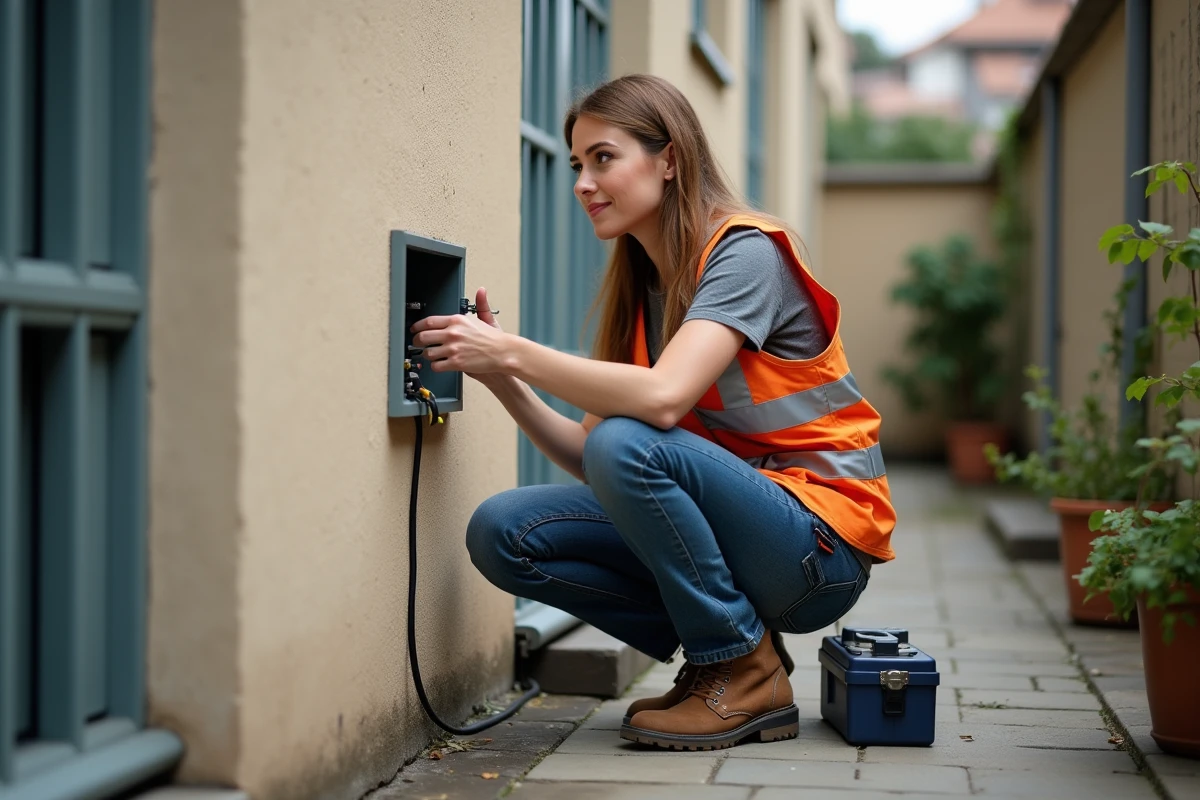
Key steps and tips for achieving a durable and reliable installation, even in challenging conditions
From the outset, one precaution is essential: cut the power at the distribution board. Nothing should be improvised; every step counts to avoid accidents. The appropriate tools make a difference: wire stripper, insulated screwdriver, drill, hole saw for preparing passages and recesses.
Once equipped, you need to target the location of the outdoor junction box. Prefer a protected area, out of reach of stagnant water and impacts. For a wall-mounted installation or a buried setup, it is crucial to use appropriate conduits to protect the cables from moisture and pests. The cable entries, equipped with cable glands, must be adjusted as closely as possible to the diameter of the wires to maintain sealing.
Inside the box, the connections must be impeccable: quick connection terminals or connectors, depending on the type of cable and context. It is essential to respect the wire gauge and adjust the tightness to avoid any weak points. In humid environments or for buried boxes, covering connections with an insulating gel or resin creates an additional barrier against water and extends the lifespan of the entire assembly.
The last step, but by no means the least: carefully close the lid, check the presence and correct position of the sealing gasket. The tightening of screws and the securing of the box must be checked. This level of requirement provides both flawless protection and compliance with the NF C 15-100 standard, ensuring an outdoor electrical installation designed to last.
In the end, a box installed correctly promises garden lighting that endures through the seasons without faltering, a gate motorization that fears neither storms nor drought. The peace of mind that allows technology to fade into the background of daily life.