The beauty market brings new active ingredients, formats and promises to our social media feeds every season. Yet caring for your skin every day means sorting out which beauty trends have staying power and which ones don’t stand up to scrutiny.
A Typology-Ifop survey found that nearly one-third of facial skincare users don’t know which active ingredients their products contain, despite expressing an interest in natural ingredients. This gap between wanting to make good choices and actually understanding product formulas raises a key question for any beauty routine: how many products do you need, and what should you look for when choosing them?
Cosmetic ingredient regulations: what’s changing in practice
Beauty trends aren’t shaped by social media alone. European regulations are redefining what brands can put into their formulas, with direct implications for consumers.
European Regulation 2024/996 now sets concentration limits for retinol and some of its derivatives. New products placed on the market since November 1, 2025, must comply with these limits. Products already on the market have until May 1, 2027, to be removed from store shelves. In practical terms, a retinol serum you buy today may not have the same concentration as one you bought two years ago.
As for microplastics, the regulation adopted in 2023 sets different deadlines for different cosmetic categories, including rinse-off products, leave-on products and certain makeup products. A Cosmébio briefing explains that an INCI name alone is not always enough to determine whether an ingredient is legally classified as a microplastic. Reading an INCI list is therefore more complicated than it might seem, even for a careful consumer.
These changes mean that a beauty routine put together two years ago may be worth reviewing—not to follow a trend, but because the formulas themselves are changing in response to regulations. Specialist resources can help you keep up with these developments, such as https://www.blogbeaute.fr, which regularly covers these topics.
Minimalist beauty routine: why fewer products can better protect your skin
The idea that layering on more skincare improves results is challenged by a simple fact: adding more products and active ingredients isn’t always the best solution. Using multiple serums, acids and targeted treatments on the same face increases the risk of irritation, sensitivity and disruption to the skin barrier.
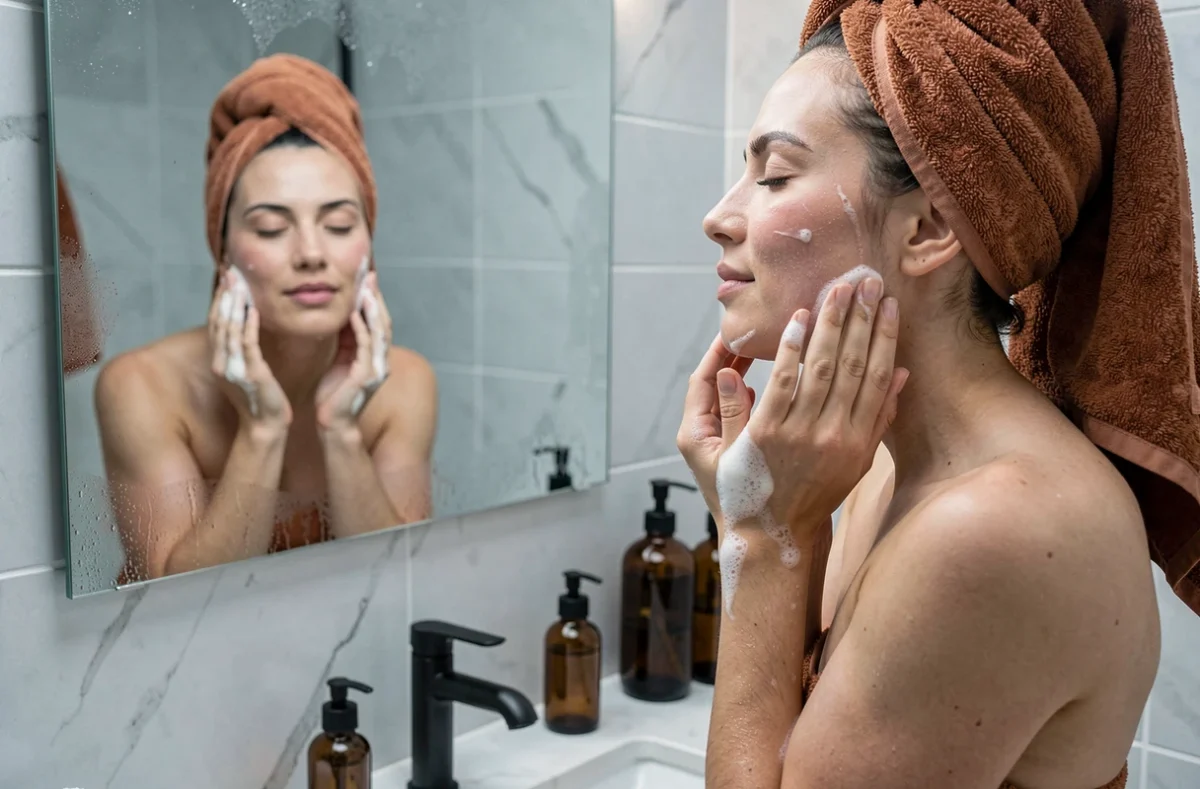
An effective daily facial routine can be pared down to three steps: cleanse, moisturize and apply sunscreen in the morning. In the evening, a suitable cleanser and one targeted treatment are enough in most cases. The goal isn’t to own as few products as possible for its own sake, but to understand what each one does and avoid doubling up on active ingredients.
Active ingredients not to layer every day
- Using retinol and exfoliating acids (AHAs, BHAs) on the same evening can weaken the skin barrier and cause redness or flaking, especially on sensitive skin
- Combining low-pH vitamin C with high concentrations of niacinamide may reduce the effectiveness of both ingredients, although recent studies suggest this incompatibility may not be as clear-cut
- Applying two serums with concentrated active ingredients one on top of the other can overwhelm the skin’s ability to absorb them. The second serum may not penetrate well and could leave an unwanted occlusive film
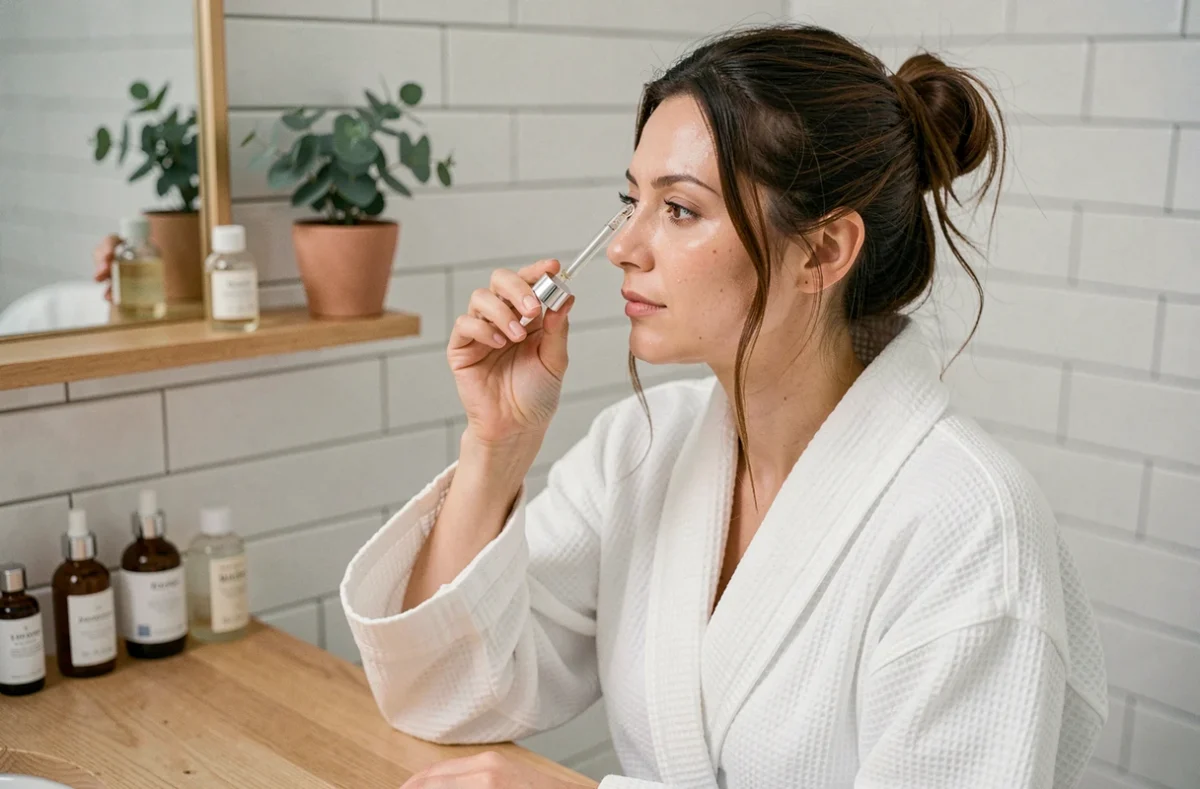
Choosing one active ingredient for each concern and sticking with it for several weeks is more reliable than switching serums every month to follow the latest trend on TikTok.
Beauty advice and social media: the limits of algorithm-driven recommendations
Social media plays a central role in discovering products and routines. Influencer recommendations and user reviews have become part of the purchasing journey for a large share of consumers.
The Typology-Ifop survey offers further insight: people are starting to use AI to look up information about skin concerns, while pharmacists and dermatologists remain trusted sources of advice. In other words, beauty advice is spread across several channels, none of which can replace a personalized diagnosis.
The problem isn’t that social media necessarily gives bad advice. It’s that algorithms serve up engaging content, not content tailored to a specific skin type. A product praised in thousands of comments may trigger a reaction on skin prone to atopic dermatitis or rosacea.
Build your routine without relying on a single source
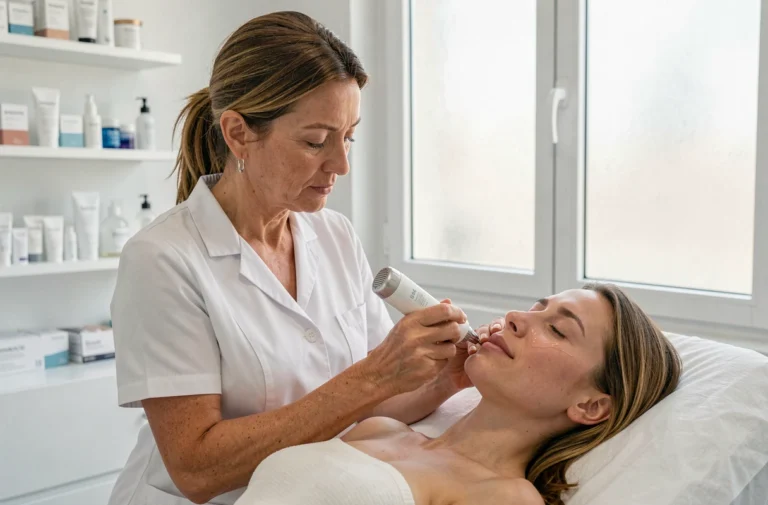
- Before putting together a routine, identify your skin type and any sensitivities with a professional, such as a dermatologist or a pharmacist trained in dermocosmetics
- Use social media to discover textures or brands, not to create a complete skincare regimen
- Check the INCI list of a product recommended online for potential allergens or active ingredients that may not work well with your existing routine
- Try only one new product at a time for at least three weeks to assess how well your skin tolerates it

Sustainable beauty trends: ingredient transparency and multifunctional skincare
Sustainable beauty is about more than recyclable packaging. It also involves the formula itself and how a product fits into a daily routine without creating waste.
Multifunctional skincare is gaining ground for a simple reason: one product that serves two purposes can replace two bottles. Think of a moisturizer with built-in SPF, a tinted balm that doubles as a light foundation, or a cleanser that removes makeup in one step. This approach reduces the number of products you need, your spending and your exposure to unnecessary active ingredients.
Making INCI lists more transparent remains a work in progress. Knowing that an ingredient appears on the label doesn’t tell you its concentration, where it comes from or how it interacts with other components. European restrictions on microplastics illustrate this complexity: an ingredient’s regulatory status depends on the product category and its chemical nature.
Ultimately, embracing today’s beauty trends without compromising your skin comes down to a fairly simple choice: use fewer products, choose them carefully and seek professional guidance rather than relying on likes. European regulations support this approach by placing limits on the most potent active ingredients. The most effective routine is often the one you can stick with over time, not the one you replace every month.