Dressing a child on a daily basis requires balancing three simultaneous constraints: freedom of movement, the durability of fabrics against repeated wear, and a visual coherence that lasts from morning to evening. Current children’s fashion trends reflect this triple requirement by incorporating more sustainable materials and cuts designed for the real lives of families.
Children’s capsule wardrobe: building a modular closet
The principle of a capsule wardrobe for children is based on a limited number of interchangeable pieces. Instead of accumulating single-use clothing (the printed t-shirt worn twice, the dress too fragile for the playground), the logic is to select neutral basics paired with a few standout pieces.
A modular children’s wardrobe operates on a basis of compatible colors. A beige cargo pant, a raw denim jean, and an anthracite legging pair well with most tops. The standout pieces add personality: a corduroy jacket, a graphic print sweatshirt, a printed jersey dress.
This approach reduces morning preparation time. A child who can assemble a coherent outfit on their own gains independence, and parents exploring the fashion section of Quand Je Serai Grande find concrete ideas to refine these combinations throughout the seasons.
The secondary benefit is economic. Fewer pieces, better chosen, worn more often: the cost per use decreases significantly.
Textile materials for children: what changes with sustainability requirements
Organic cotton, linen, and Tencel (lyocell) dominate collections focused on sustainability. These fibers share a common point: they withstand frequent washing without deforming, a crucial criterion for children’s clothing.
European regulations reinforce this dynamic. The regulation on the eco-design of sustainable products, in effect since July 2024, includes textiles among the priority categories of its 2025-2030 work plan. Specific obligations for clothing depend on a subsequent act, but brands are already anticipating these requirements in their children’s ranges.
The digital passport for products, provided for by this same regulation, should ultimately make information about a garment’s life cycle accessible. For parents, this means increased transparency regarding the actual composition of fabrics and manufacturing conditions.
Identifying materials suitable for children’s skin
- Certified organic cotton (GOTS or equivalent) limits exposure to chemical treatment residues, a sensitive point for atopic or reactive skin.
- Linen, naturally thermoregulating, is suitable for transitional seasonal periods when temperature fluctuations complicate outfit choices.
- Recycled synthetic blends (polyester made from plastic bottles) offer good abrasion resistance, but their breathability remains lower than that of natural fibers.
Second-hand children’s textiles: extending the lifespan of clothing
The rapid growth of children makes second-hand particularly relevant for this age group. A garment worn for a few months by a four-year-old often arrives in excellent condition on the second-hand market.
According to Refashion, the second-hand textile market grew in volume and value in 2025 in France. This trend applies to clothing as well as shoes and household linens. For families, it is a concrete lever for creating a stylish wardrobe without multiplying new purchases.
Some precautions should be taken when buying second-hand. Check the elasticity of seams (especially on leggings and pants with elastic waists), inspect the condition of zippers, and look for signs of pilling on knits. A well-inspected second-hand garment can last an entire season without issue.
Everyday children’s outfits: combining style and practicality season by season
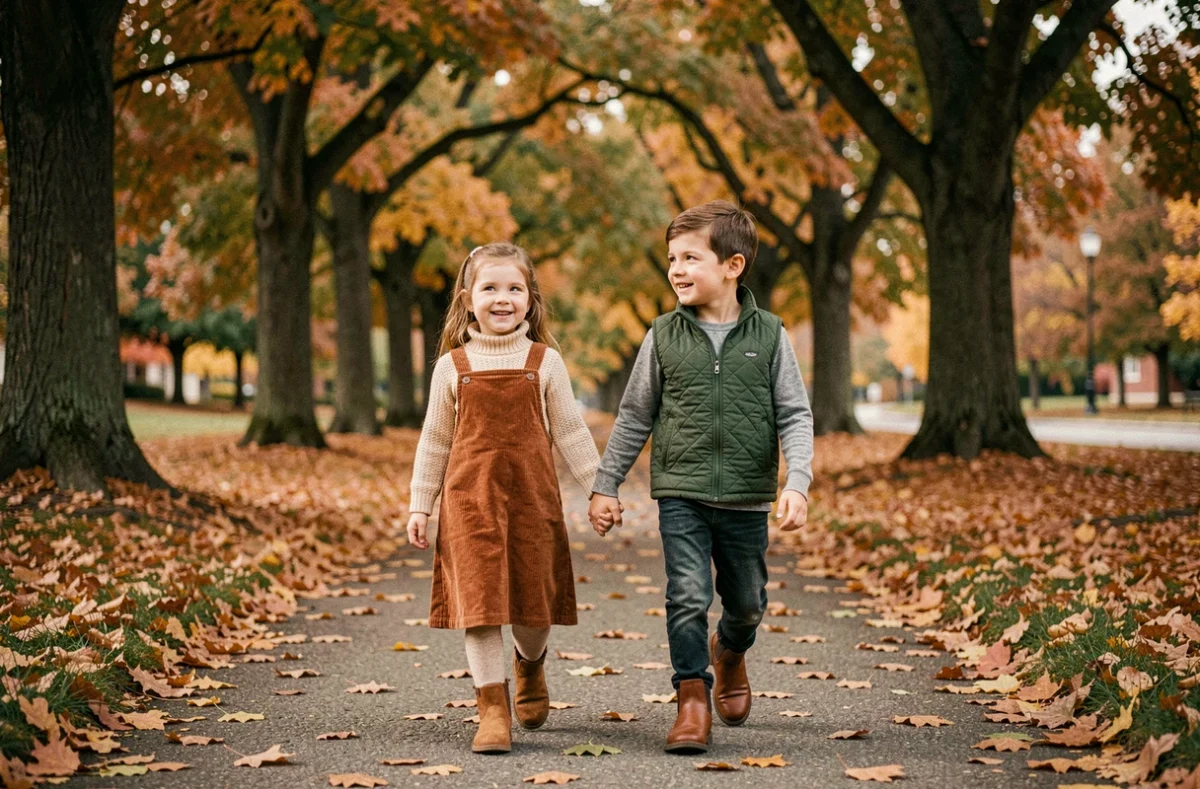
Layering remains the most effective technique for dressing a child in response to temperature variations. A cotton t-shirt, a zip-up cardigan, and a lightweight waterproof jacket create a three-layer system that can be adjusted throughout the day.
Versatile pieces to prioritize
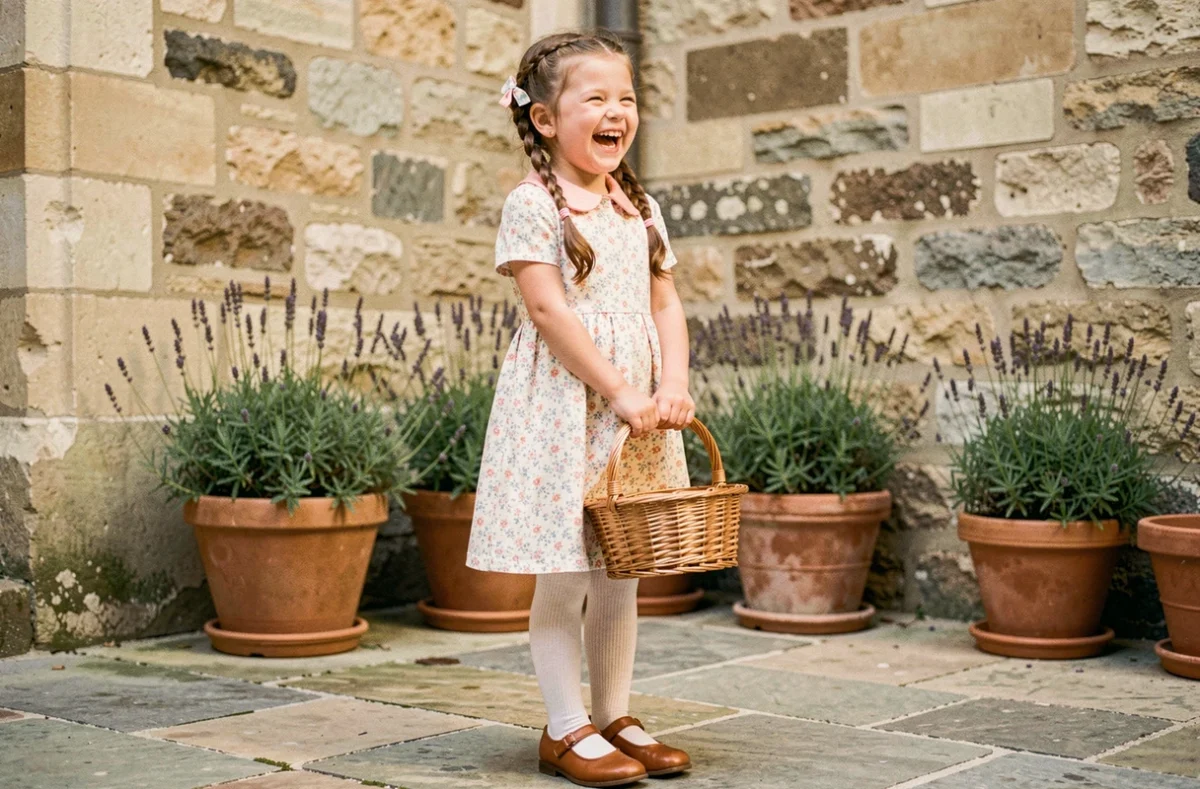
The jersey dress, worn alone in summer or with tights and a cardigan in autumn, exemplifies the concept of a multifunctional piece. Structured fleece joggers (not baggy sweatpants) transition from the gym to Sunday brunch with a simple change of top.
Accessories transform a basic outfit into a styled look. A headband, a pair of contrasting socks, or a colorful backpack are enough to personalize a neutral ensemble. These details also allow the child to express their preferences without compromising the coherence of the wardrobe.
Common mistakes in children’s outfits
Too delicate materials (silk, fine lace) create frustration for the child and anxiety for the parent. Clothing with complex fastenings slows down independent dressing. Shoes without non-slip soles pose a safety issue, regardless of their appearance.
Everyday style relies on choices of cut and material, not on multiplying pieces. A reduced but well-thought-out wardrobe, partially refreshed through second-hand items and built around compatible basics, covers most situations for an active child. The next step for brands will be to make this sustainability information clear from the label, as European regulations become more defined.