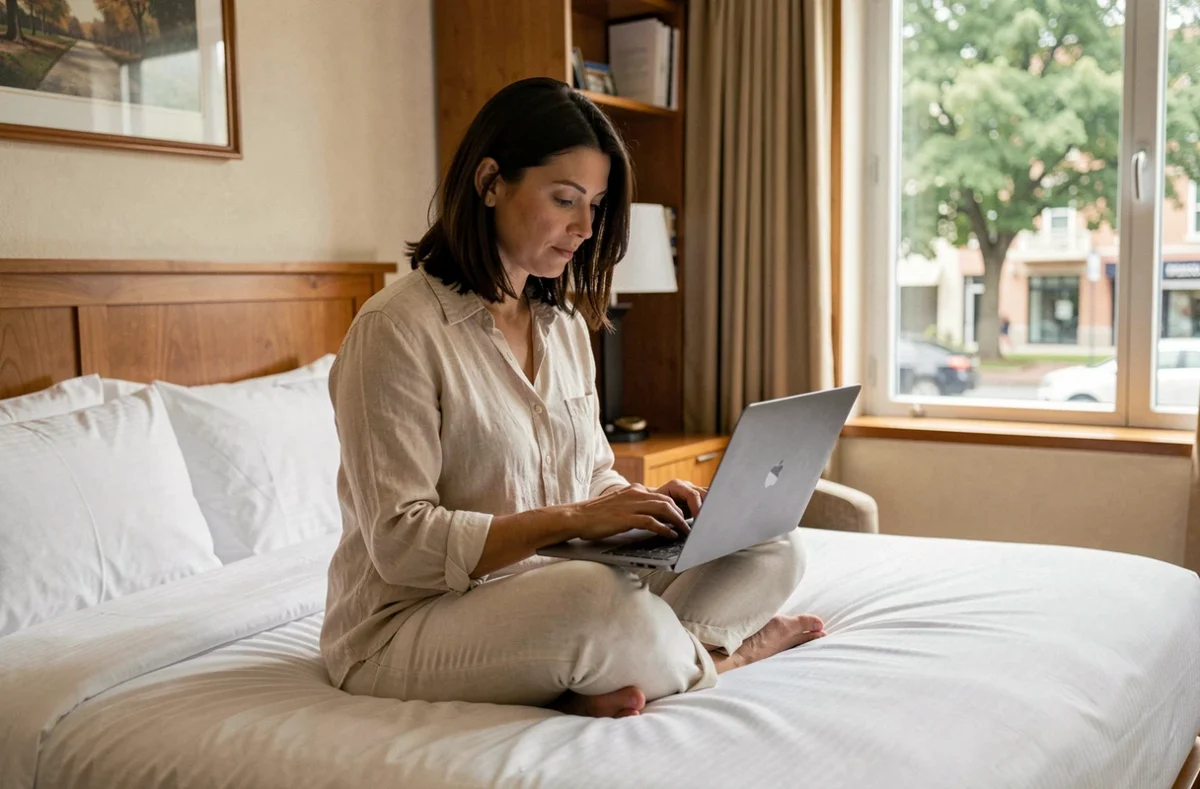
Choosing comfortable accommodation for a trip starts with making sure you can get a good night’s sleep. The bedding, noise level in the room, window coverings and room temperature matter just as much as the number of stars displayed outside. Recent traveler surveys also confirm that cleanliness, bed quality and Wi-Fi are among the most important factors, well ahead of the property’s overall prestige. Here’s how to approach your choice methodically.
Noise, light and temperature: the three enemies of a good night’s sleep while traveling
Have you ever spent a night in a hotel room overlooking a busy avenue, with sheer curtains and noisy air conditioning? This kind of inconvenience can turn an enjoyable stay into an exhausting ordeal.
Before booking, look for three specific details in the accommodation description. First, the room’s location and exposure to noise: facing the courtyard or the street, near an elevator or a bar. Recent reviews often mention this.
Next, check the type of curtains or shutters: blackout curtains or roller shutters can make the difference between waking up at 5 a.m. and enjoying a proper lie-in. Finally, check how the temperature is controlled: individual reversible air conditioning, a ceiling fan or simply an opening window.
These details aren’t always included in booking platform listings. Don’t hesitate to contact the property directly to ask. A hotel or guesthouse that responds clearly to this kind of question is already giving you a good indication of the quality of its hospitality.
To compare several options and filter them according to your priorities, browse accommodation on Azami Voyage to quickly view the features of each property.

Hotel stars and online reviews: what really helps you choose
Star ratings are still a useful guide, but they don’t tell the whole story. They certify the presence of certain amenities (minimum room size, required services), not the actual quality of the guest experience. Online reputation and detailed reviews carry more weight when choosing than the number of stars displayed.
When reading reviews, focus on comments that describe specific facts. A review like “clean room, firm mattress, quiet street at night” is more reliable than an overall score of 8.5 with no details. Filter for recent reviews (less than six months old) to account for any renovations or changes in management.
How to spot misleading signals in reviews
Be cautious about accommodation with nothing but perfect ratings and short comments. Instead, look for mid-range reviews (scores of 6 to 8) that describe both the strengths and the drawbacks. These are often the most honest.
Another point to check: arrival arrangements and whether there’s a member of staff to welcome you. Travelers continue to prefer checking in with a person rather than using a key box or a code sent by text. If you’re arriving late in the evening, knowing in advance how to collect your keys can save you unnecessary stress.
Bedding, bathroom and electrical outlets: practical details to check
Beyond the overall atmosphere, the comfort of your accommodation depends on very practical details that aren’t always visible in the photos.
- Bedding: ask what type of mattress it is (spring, foam or latex) and how large the bed is. A 140 cm bed for two people is still common in budget hotels, which can be an issue for stays of several nights.
- Bathroom: most travelers surveyed in recent studies prefer a bathroom separate from the bedroom and a shower rather than a bathtub. This information rarely appears in search filters, but can be found in detailed descriptions.
- Electrical outlets near the bed: a small detail that can become annoying when your phone doubles as an alarm clock and the only outlet is at the other end of the room.
- Wi-Fi: check whether it’s included, paid or speed-limited. For a business trip, slow Wi-Fi can make the room unusable as a workspace.
Checking these points before booking helps avoid most disappointments. The accommodation description and the host’s responses to reviews often provide this information.

Accommodation for families or groups: actual capacity and layout
Booking a “family” room or an apartment for four doesn’t guarantee that everyone will sleep comfortably. The actual number of beds and the layout of the space are worth checking every time.
A sofa bed in the living room doesn’t offer the same rest as a proper bed in a separate bedroom. For a stay of more than two nights, this distinction can make a huge difference to the group’s comfort. Ask the host directly: how many proper beds are there, how much living space is available, and is there a door between the sleeping areas?
Short-term rentals: a few extra checks
If you’re choosing an apartment or house rental, check that the property complies with local regulations. Several European countries are tightening rules for short-term tourist rentals, with registration requirements that vary by city. A registered and declared property gives you more options if something goes wrong.
Also check the cancellation policy, the security deposit amount and the key handover times. These practical details, often tucked away at the bottom of the page, can determine how smoothly your arrival goes.
Choosing comfortable accommodation has less to do with prestige than with carefully checking the details. Noise, bedding, layout and check-in arrangements: verifying these practical factors before booking can make the difference between a restful trip and a stay where fatigue sets in from the very first night.