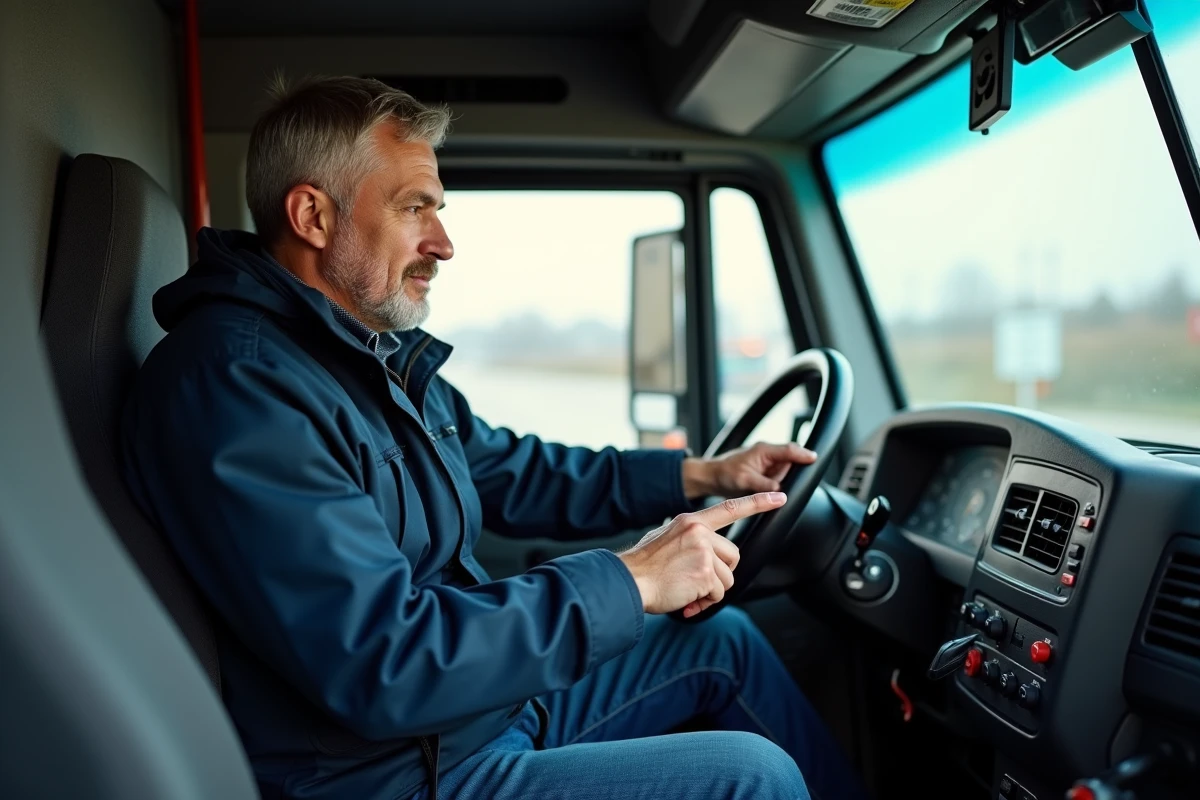
The reserve warning light doesn’t bother with poetry: it simply lights up, period. On the Renault T, this light comes on when there are between 60 and 80 liters of diesel left, depending on the truck’s configuration. Some drivers can still go over 100 kilometers like this, but the margin for error is never set in stone. Driving style, load, terrain, and road conditions are all variables that make each journey unique.
Manufacturers prefer to keep silent on the matter. There are no official figures on reserve autonomy: it’s up to each driver to deal with the uncertainties and sometimes considerable discrepancies from one driver to another. It’s the onboard computer that estimates the number of kilometers remaining, based on recent consumption, without ever guaranteeing absolute accuracy.
What the reserve warning reveals about the Renault T: key figures and operation
The Renault T stands out as a heavy-duty truck designed to cover long distances. Under its cab, the fuel tank varies between 600 and 1200 liters, depending on the version. As soon as the level drops into the red zone, the reserve light comes on the dashboard. The threshold set by Renault generally corresponds to 5 to 10% of the capacity, which is about 50 to 60 liters for this type of truck.
This light never appears by chance. It indicates that you have a reserve autonomy of diesel in the Renault T often between 150 and 200 kilometers, depending on the average consumption of recent trips. The information, now clearly displayed on the dashboard, allows for stress-free anticipation of the next refueling and helps avoid running out of fuel.
Three major indicators are essential on the dashboard: the light activation, the amount of fuel remaining (in liters), and the calculated autonomy. The appearance of the reserve is not a dramatic alert signal, but it invites caution. Continuing to drive on reserve exposes the engine, fuel pump, and injectors to dirt that settles at the bottom of the tank.
The entire logic of the warning light is based on precise thresholds designed to ensure the safety of the truck and the reliability of the journey until the next fuel stop. This margin allows the driver to organize without excessive pressure while avoiding the scenario of running out of fuel, a true nightmare for truckers.
Real autonomy in reserve mode: how far can you go without risk?
On the Renault T, it’s not about fantasizing but sticking to the facts. When the light comes on, there are between 50 and 60 liters left in the tank, according to manufacturer data. This represents, under “normal” conditions, 150 to 200 kilometers of autonomy, provided that reasonable consumption is maintained.
The variation is wide, and for good reason: the reality of the road can skew averages. Terrain, load, speed, tire condition, type of route (highway, countryside, urban area)… every detail counts. The fuel consumption of a heavy truck like the Renault T generally ranges between 28 and 38 liters per 100 kilometers. This means that the distance traveled on reserve primarily depends on the situation encountered and the driver’s ability to read the dashboard information.
Here are some concrete benchmarks to gauge autonomy based on vehicle type and consumption:
- A 19T carrier truck on reserve (40 liters, 28 L/100 km): 140 km remaining.
- A 44T tractor unit (80 liters, 32 L/100 km): up to 250 km possible.
- On a standard Renault T (50-60 liters), the range is between 150 and 200 kilometers.
Caution is always advisable, regardless of the estimate. The closer the needle gets to zero, the higher the risk of running out of fuel or damaging the fuel system. The displayed autonomy is just a theoretical calculation: unpredictable weather, traffic, unexpected detours… anything can disrupt the situation in just a few kilometers. Keep an eye on alerts and adjust your route accordingly.

Tips to optimize the last kilometers and avoid unpleasant surprises
On board the Renault T, every meter gained in reserve mode requires real discipline. When the light comes on, it’s no longer about delaying the refuel but managing consumption to preserve the mechanics. Adopting smooth driving, limiting sudden accelerations and braking, and maintaining a steady speed are all actions that extend autonomy.
Truck maintenance also plays a key role. A clean fuel filter, cleaned injectors, properly inflated tires—all these factors help gain valuable kilometers. Regularly check levels and monitor dashboard information. It’s often a small detail that makes the difference between a controlled stop and an enforced halt.
Frequently driving on reserve risks sucking up the residues that settle at the bottom of the tank. These impurities can clog the filter, strain the pump, and damage the injectors. Running out of fuel is no longer a distant threat but a harsh reality: immediate stop, breakdown, interrupted mission.
Here are some reflexes to adopt to navigate the reserve without unpleasant surprises:
- Find the nearest gas station as soon as the light comes on.
- Reduce the use of non-essential electrical equipment.
- Organize your route considering the autonomy displayed on the dashboard.
Managing the reserve is not a matter of chance. It involves anticipating each stop, monitoring the mechanics, and maintaining control. On the road, vigilance and anticipation make the difference between a well-managed journey and an avoidable hassle. Taking care of your Renault T means driving further… and sleeping soundly.