
In search of the ideal solution to improve your hearing, be sure to consider several criteria. Current hearing aids offer a range of varied options, from discreet models to more technologically advanced devices. To make an informed choice, be sure to compare the available features, such as Bluetooth connectivity, automatic adjustments, and battery durability.
User reviews also play a decisive role. By consulting testimonials and feedback, you can assess the satisfaction of others who have opted for similar models. A hearing professional can also guide you in finding the device that best suits your specific needs.
The different types of hearing aids and their features
When choosing a hearing aid, you need to understand the different options available. Modern hearing aids primarily fall into three categories: in-the-ear, behind-the-ear, and micro-behind-the-ear.
In-the-ear
In-the-ear hearing aids are inserted directly into the ear canal, offering maximum discretion. Among their features:
- Integrated microprocessor for better sound quality
- Bluetooth connectivity for compatibility with smartphones
- Rechargeable battery or disposable batteries option
Behind-the-ear
Behind-the-ear aids are placed behind the ear and connected to the inner ear by a thin tube. They are ideal for severe to profound hearing loss. Their advantages include:
- Ability to integrate a T-coil to improve hearing in noisy environments
- Greater durability and ease of handling
Micro-behind-the-ear
Micro-behind-the-ear aids combine discretion and performance. They are placed behind the ear, with a receiver in the ear canal. Their features include:
- Audicil technology for hearing aids to automatically adjust settings based on the sound environment
- Background noise suppression system for clearer listening
By evaluating these options, you can determine which type of device best suits your hearing needs.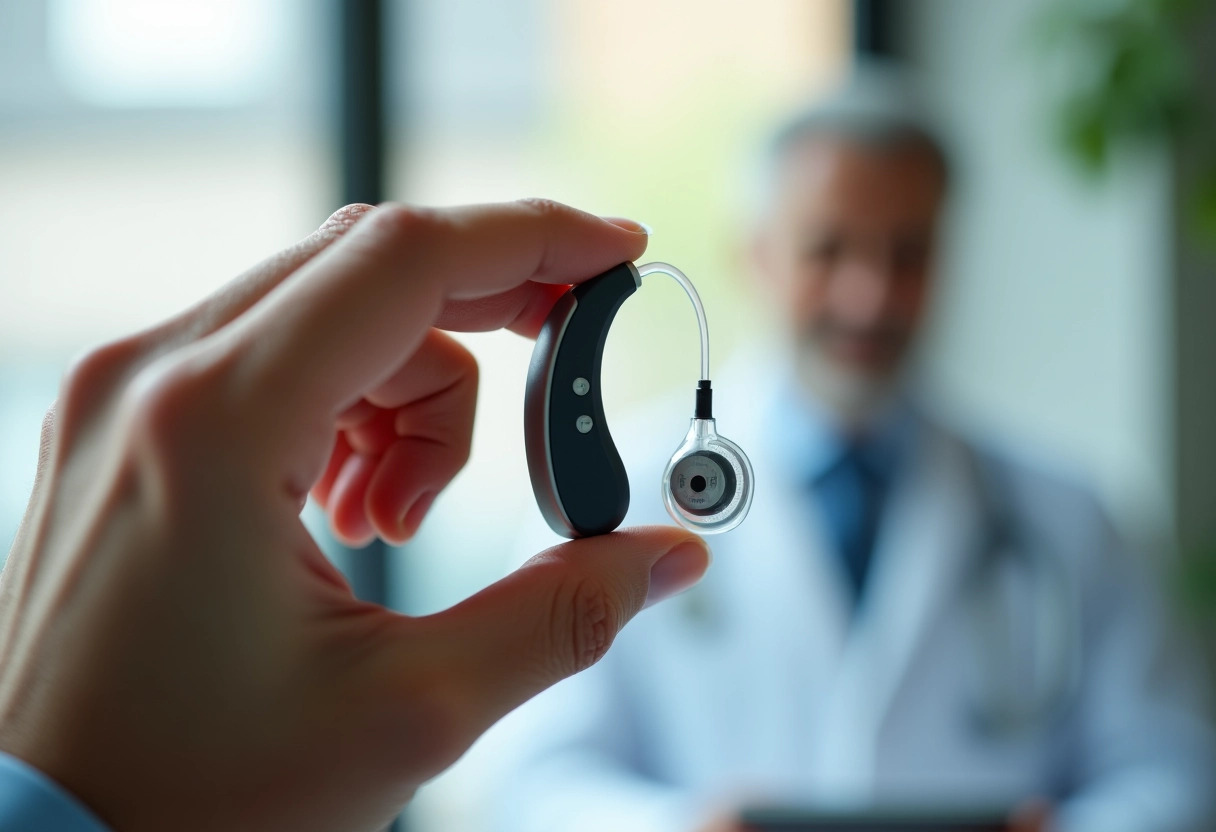
How to choose the best solution for your needs: reviews and recommendations
In France, approximately 6 million hearing-impaired people face major choices regarding their hearing aids. To determine the best solution, consult an otorhinolaryngologist (ENT), an audioprosthetist, or a general practitioner. These professionals will guide you based on an audiogram, an essential test to measure your hearing loss.
Evaluation and diagnosis
The audiogram is the first key step. This test determines the type and degree of hearing loss. Once this diagnosis is established, the otorhinolaryngologist (ENT) can direct you to the type of device best suited for you.
Choosing hearing aids
When choosing your hearing aid, consider several criteria:
- The level of hearing loss: mild, moderate, severe, or profound
- Your specific needs: noisy environment, work, social life
- The features: Bluetooth connectivity, noise suppression, rechargeable battery
Brands like Oticon, Phonak, and Signia offer a varied range that meets these criteria.
Recommendations and trials
Before finalizing your choice, ask to try several models. Hearing centers often offer free trials to allow you to test different devices in your daily life. Also, consider the opinions of other users and recommendations from professionals.
Access to effective hearing solutions, particularly thanks to the 100% health policy, greatly facilitates the choice and acquisition of devices tailored to each individual’s specific needs.