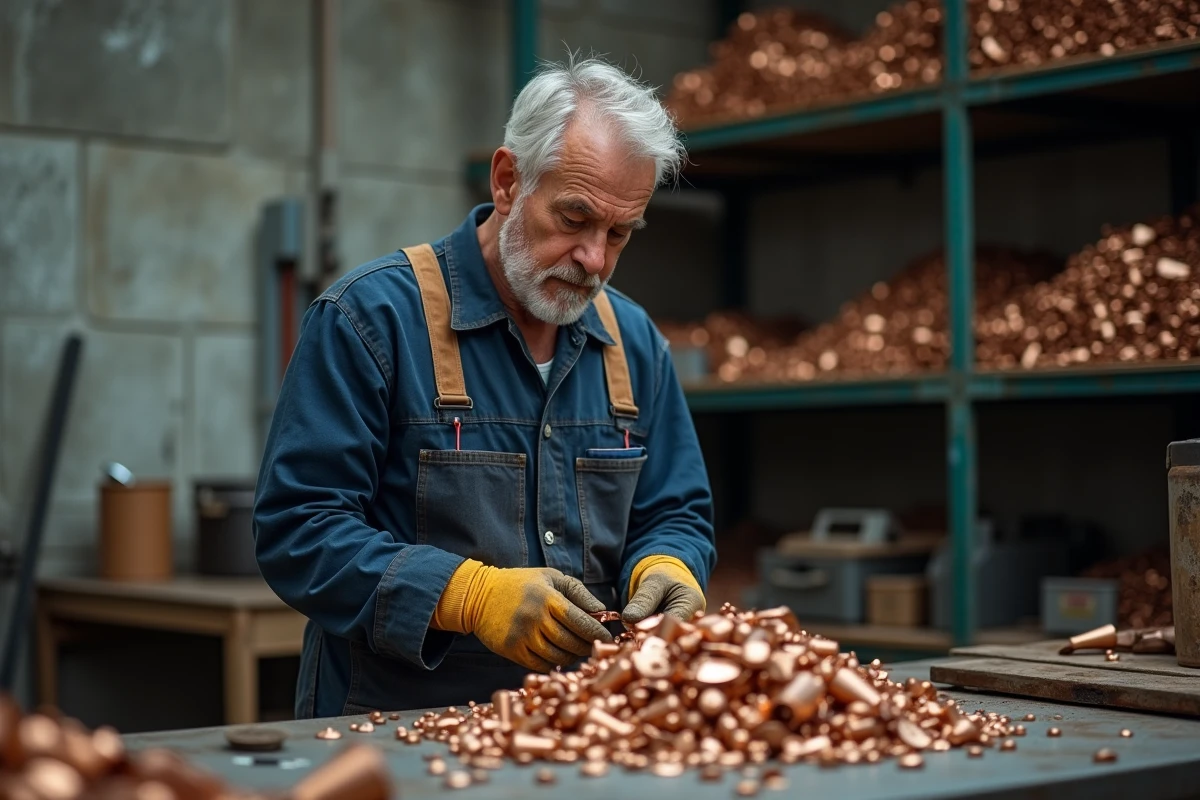
You have a batch of bronze scraps stored in a corner of your workshop and you are wondering what it could be worth in 2026. The natural reflex is to look for a price per kilo, a single figure that would settle the question.
The problem is that this figure doesn’t really exist. The actual amount received depends on several variables that the official price does not reflect: the composition of the alloy, the level of sorting, the volume brought in, and the conditions of the scrap dealer’s buyback.
Discrepancy between theoretical bronze price and actual buyback price
Bronze is not a pure metal. It is an alloy, primarily of copper and tin, sometimes supplemented with zinc, lead, or phosphorus. Each combination has a different value in the recycling market.
When a site displays a “price of bronze per kilo,” it provides an indicative average. The rate offered by a scrap dealer or trader depends on what they can actually resell after melting. Phosphor bronze used in plumbing does not trade at the same level as art bronze rich in tin.
Several factors widen the gap between the displayed price and the amount paid. To anticipate the price per kg of bronze in 2026, it is necessary to look more closely at these factors rather than relying on a single indicator.
Alloy, sorting, and volume: what affects the price per kg of bronze
You may have noticed that two scrap dealers located in the same city offer different rates for the same metal? This is not by chance. Here are the parameters that weigh most heavily on the actual price paid.
The exact composition of the alloy
A bronze with a high copper content (above 85%) is closer to the copper price, which fluctuated around 10 to 13 euros per kilo at the beginning of 2026 according to available data on the European market. An alloy containing more zinc or lead is worth less, as these metals are inexpensive.
Knowing the nuance of your alloy directly changes the buyback rate. If you have access to the technical designation (CuSn8, CuSn12, etc.), mention it to the trader. Without this information, they will apply a default price, often conservative.
The level of sorting and the cleanliness of the scraps
Bronze scraps mixed with brass, steel, or paint residues incur a discount. The scrap dealer will have to sort it themselves, which represents time and labor. A clean and homogeneous batch trades significantly better than a mixed batch.
- Separate the bronze from other metals before bringing in the batch (a magnet is enough to remove ferrous materials)
- Remove non-metallic elements: plastic, rubber, glue or thick paint residues
- Group pieces by type of alloy if possible, based on color and density
The volume brought in
Bringing in five kilos of scraps does not grant access to the same rate as a pallet of fifty kilos. Some recyclers impose a minimum billing or apply a reverse sliding scale: the lower the volume, the higher the discount per kilo. Grouping several batches before selling allows you to reach a more advantageous volume threshold.
Pressure on copper and tin in 2026: what impact on bronze scraps
The bronze market in 2026 does not exist in isolation. It directly depends on the prices of its two main components: copper and tin.
The rise in copper and tin supports the value of bronze scraps, but it does not mechanically translate to the buyback price from the scrap dealer. The recycling market absorbs these increases with a delay and margins specific to each operator.
Why this delay? Because the recycler must cover their transportation, melting, and marketing costs. These fixed costs do not decrease when the price rises. Therefore, the seller of scraps recovers only a fraction of the price, not its entirety.

Buyback fees and buyback conditions: traps to be aware of
The rate displayed by a scrap dealer is not always the final rate. Several common practices reduce the amount received.
- Tolerance on impurities: some operators apply a flat-rate discount of a few percent on the gross weight to compensate for possible impurities, even on a clean batch
- Minimum billing: below a certain weight, the buyback may be refused or subject to a very low floor price
- Transportation fees: if the recycler travels to collect, the transport cost is deducted from the buyback amount
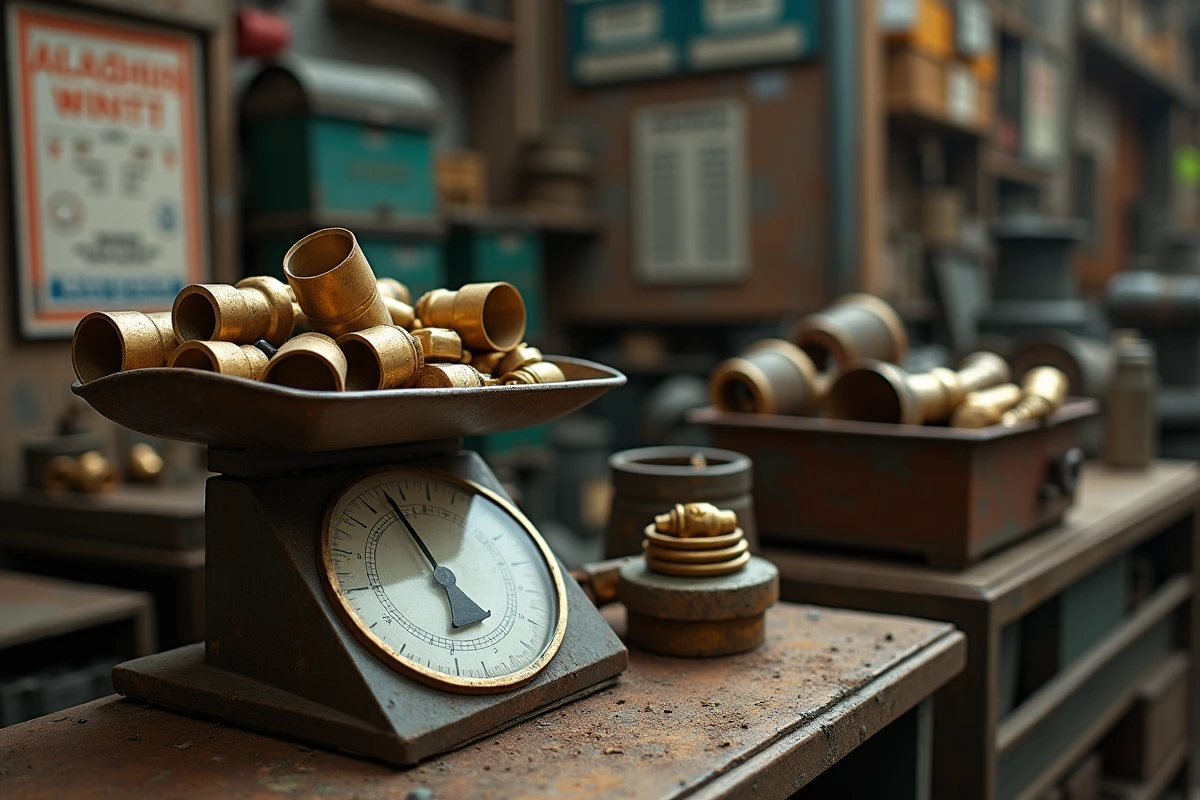
- Weighing: demanding a counter-weighing on a certified scale protects against measurement discrepancies
These conditions vary from one operator to another. Comparing three quotes before selling a batch remains the most reliable method to obtain a correct rate.
When to sell your bronze scraps in 2026
Timing matters. The prices of industrial metals fluctuate over the weeks, sometimes by several percent. Monitoring the evolution of copper on the London Metal Exchange provides a useful indication, as copper represents the major component of bronze.
Selling when the copper price is at a recent peak allows you to capture part of the increase. Waiting for a hypothetical perfect peak exposes you to the risk of a rapid correction.
The price per kg of bronze in 2026 will remain dependent on pressures on raw materials and industrial demand. For the seller of scraps, the real room for maneuver does not lie in forecasting the price, but in preparing the batch: identified alloy, careful sorting, sufficient volume, and comparing multiple buyback offers.