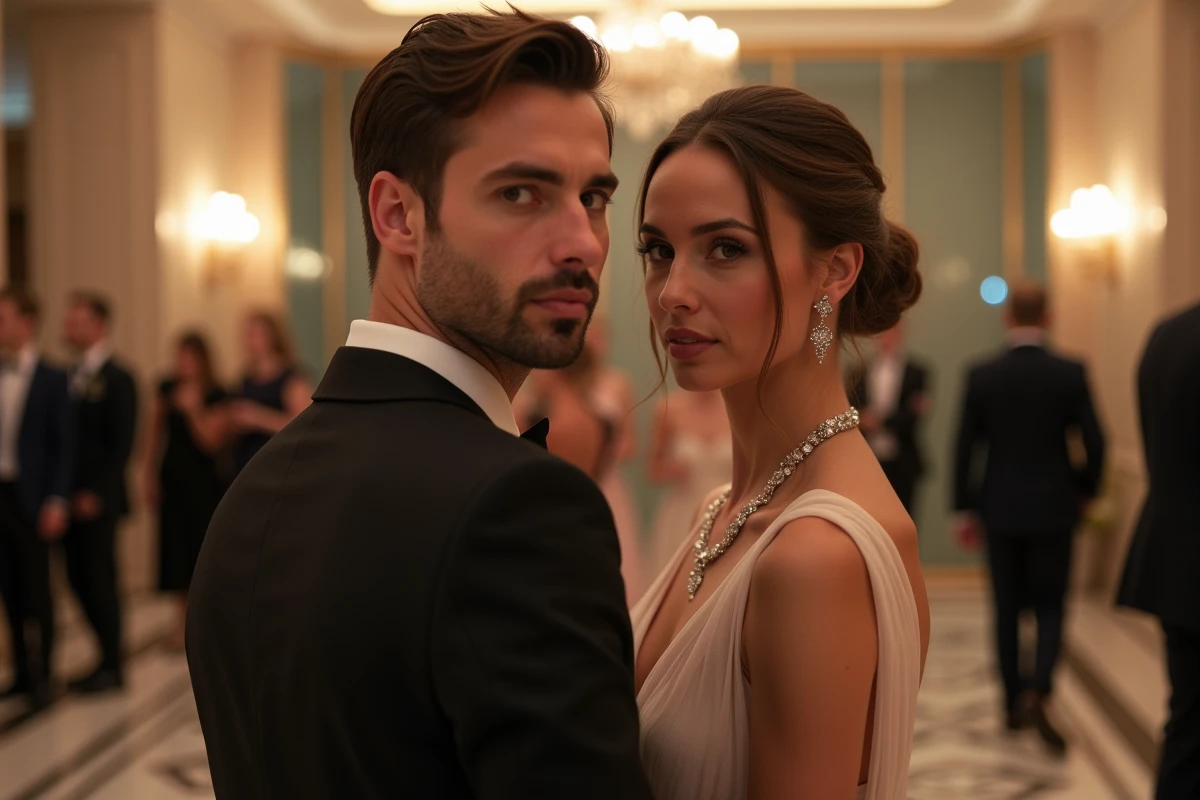
A social media post is sometimes enough to reignite a rumor that has already been denied multiple times. In April 2024, various accounts circulate the supposed announcement of the marriage between Alexandre Benalla and Aurore Bergé, a figure in the government.
Despite the lack of official sources, the rapid spread of this information raises questions about the functioning of media and political spheres. The reactions, ranging from indignation to irony, reflect a persistence of speculation surrounding public figures.
The marriage of Alexandre Benalla and Aurore Bergé: what really happened?
No confirmation, no authentic act. Yet, it only took a few hints for the marriage of Alexandre Benalla and Aurore Bergé to become, for a moment, the political soap opera of the time. Within hours, a rumor launched online spread rapidly. Anonymous accounts stirred the pot, social media buzzed, and every hashtag piqued curiosity. Nothing concrete, all imaginary, but that was enough for the topic to invade the web and spark public debate.
This duo, thrust into the spotlight without seeking it, found themselves caught in the nets of a collective scenario. Alexandre Benalla, the man of many twists, and Aurore Bergé, the face of the government, saw their names intertwined in a supposed alliance. On social media, the flurry of edits and double-meaning messages escalated. Their mere proximity to power, doubts about the transparency of the system, and a political atmosphere already weighed down by distrust were enough to trigger the fantasy machine.
The story made the rounds of news feeds, until media and officials had to step up to deny it. But at the heart of digital flows, the denial carries little weight against virality. Doubt creeps in, invectives follow, and the controversy thrives, sometimes despite the facts. The speed of propagation speaks volumes about the permeability between information and fabricated affairs.
Media rumor and political reactions: what are the stakes for public life?
This false marriage not only shook the news cycle, but it also strained the relationship between private life and public space. In a time of tension surrounding reforms, the yellow vests, or debates on freedoms, France once again proves its vulnerability to the frenzy of the web.
In the face of this onslaught, several political figures have taken a stand. They denounce the confusion maintained between private life and political engagement. Defamation adapts to the speed of digital; the law struggles to provide real protection. Article 9 of the civil code promises the preservation of private life, but in practice, algorithms and commentary take precedence.
To better understand the repercussions of this type of rumor, several recurring phenomena must be observed:
- The increasing permeability between personal and political realms, exposing public figures to all kinds of speculation.
- The digital frenzy where everyone becomes, willingly or not, a disseminator of rumors with a click.
- The mobilization of parliamentary bodies, such as the National Assembly or the Senate, which are considering strengthening the legislative framework.
The affair does not stop at a mere rumor. It spills over into the very notion of democracy, where the uncontrolled circulation of information undermines the principle of the right to truth, to privacy, and to the separation between public life and legitimate secrecy. As major deadlines like the presidential election approach, these incidents illustrate the risks of a public debate, unfiltered and limitless, at the mercy of buzz.

Beyond the anecdote: what this affair reveals about public opinion and French society
In this digital turmoil, public opinion sometimes appears defenseless. The speed of dissemination, the power of networks, the desire to comment in real-time: everything combines to transform the rumor into a “truth” of the hallway. The already tenuous boundary between current events and invention blurs a little more each day.
The year 2024 is no exception. Trust in the media fluctuates, weakened by the accumulation of controversies, the traces of the Covid crisis, heated debates on immigration law, or other significant events of the year. The exercise of fact-checking, essential but often too late, never fully erases the mark left by the initial rumor. Once protected, the private life of elected officials turns into a collective playground, where everyone feels entitled to speculate or caricature.
Here are the most tangible trends observed in the evolution of these phenomena:
- An increasing distrust of the democratic apparatus and its traditional relays.
- Blurred boundaries between individual and collective spheres.
- A law that desperately tries to adapt to the extreme volatility of the digital world, without truly managing to control it.
In this climate, the rumor acts as a spark. It changes the way a country approaches its news, builds its certainties, or deconstructs its political imagination. Who would have thought that a simple tweet, with no evidence, would so disrupt the balances of an already tense system?